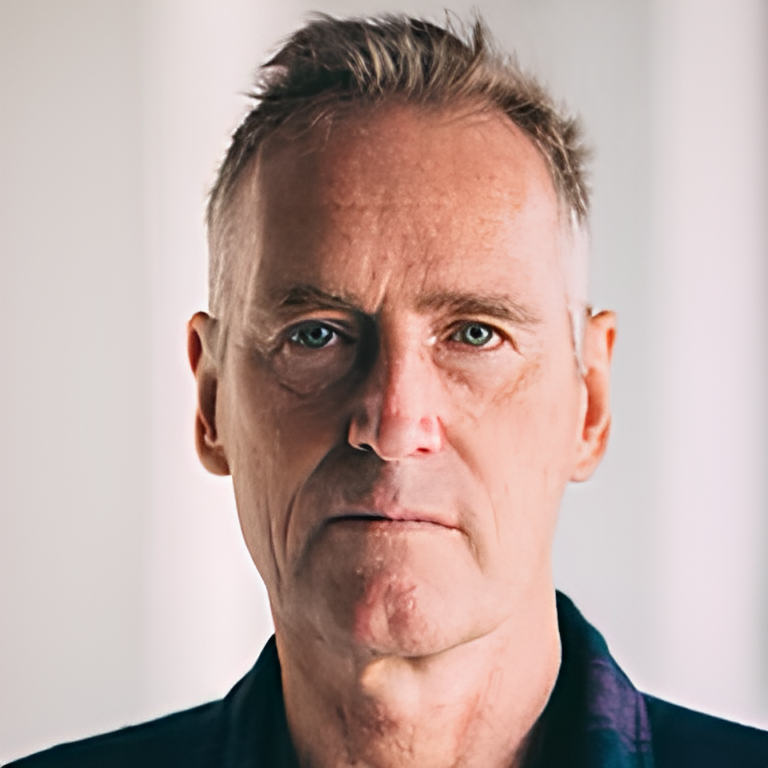
Tatino Encounters | Maria Cervera on the future of series
TATINO has a long history of collaborating with some of the series industry’s most relevant and accomplished voices to support creators in developing narratives that are not only compelling, but culturally and emotionally resonant. Recently, our very own Anastasia Hoppanova has met with three distinguished professionals to discuss the future of series.
Second encounter to discuss that fascinating topic:

Maria Cervera | Producer | Spain
Maria Cervera is a true storyteller across borders. From creatively overseeing iconic series like Élite, Cable Girls & Club de Cuervos as part of the Netflix International Originals team, to international co-productions at Plano a Plano, El Estudio & Paramount — Maria brings 15+ years of film & TV expertise spanning Spain, Latin America, the US & Europe. Currently leading content strategy at Cattleya Producciones.
In the microdrama environment, do you think it’s possible to design narrative beats so that the story still feels coherent, rather than just a sequence of cliffhangers?
So micro drama environment, like that's a new one for us. But I think storytelling has always been defined by the context where these stories have been told. And having to adapt to specific formats, it's at the start of serialized storytelling.
Like in the history of TV series, soap operas started being advertising like sales for soap.
And actually adapting a story to be told in two minute units. It is a good challenge to have. I'm not sure where this will lead us. I'm not sure this will be something that will be expanded ad infinitum. But I'm pretty sure we will find clever ways of telling stories that make use of the circumstances they are born in.
"micro drama environment, like that's a new one for us. But I think storytelling has always been defined by the context where these stories have been told. And having to adapt to specific formats, it's at the start of serialized storytelling."
What do you feel the industry is projecting onto AI in relation to creative work, and how does that align or clash with your own experience?
Well, I think right now everybody is projecting a lot of things on AI and let's see where that goes. To me, it's mostly related to getting tools to facilitate and to speed some stages of your work. The same way as like a scheduling software will help you do a production lineup that you would not have been able to do before. To me the biggest challenge is how to educate new generations into doing the thinking that the AI starts doing for them.
Again, it's the new generations who start their adventures based on what they already get delivered from AI who will have to face, like putting them in a context where the real world stops being a result of your own experience.
And I'm not really in possession of an answer right now because I think it's going to happen somehow and just not able to picture how. For us with some years behind us, with some experience, I think we can mostly benefit from these AI tools because we can still recognize what they do wrong and try to improve and complement that with their own experience. Again, it's the new generations who start their adventures based on what they already get delivered from AI who will have to face, like putting them in a context where the real world stops being a result of your own experience.
From your environment and the people that you work with, do you feel like there is a difference between how the producers see those AI tools and how the creatives see them? Do you think for example that writers and producer see different potential in it?
I think my feeling is that writers, especially seasoned writers, are more scared of it and some of them have started to embrace what kind of possibilities they bring into their lives to make things easier for them. But I will say that it’s perhaps producers who have the biggest chance of being replaced first. Because some of the automatizations of the processes affect some of the work producers do.For instance, putting a good presentation together is something that requires a lot of effort and a lot of investment that will come from the producer side or from the production company’s side.
My feeling is that writers, especially seasoned writers, are more scared of it and some of them have started to embrace what kind of possibilities they bring into their lives to make things easier for them. I think only people who have a good eye to detect what's special and that can be a producer, that can be a writer, will start to appreciate what they can add to those formulas.
This is something that can be automatized and put back in the hands of writers. At the same time it has implications, it all becomes standardized, it all becomes more formulaic. I think only people who have a good eye to detect what's special and that can be a producer, that can be a writer, will start to appreciate what they can add to those formulas.
In adapting IPs, what tells you that the story can generate multiple seasons of conflict? (a sustainable series engine rather than just a strong premise)
There is like a non-asked question about whether we are still in the era of IP adaptations, which I argue we are perhaps getting out of hopefully. I think there will always be IP adaptations, but I believe we are about to start having more room for original concepts.
"I think it depends on the universe it creates and how faithfully you plan to adapt that universe. If those characters are rich enough and that that setting is rich enough, it will keep providing stories to you."
About how to detect if the engine of an IP is worthy of a lengthy adaptation, I think it depends on the universe it creates and how faithfully you plan to adapt that universe. If those characters are rich enough and that that setting is rich enough, it will keep providing stories to you. Perhaps the question is a different one, are we ready to start thinking again in long running series, in long stories that are with us for years. I hope we are because I think it's very human. We are transitioning there and possibly I don't think an IP will necessarily be at the basis of these kinds of stories.